Brilliant Venus and a Harvest Moon
Use the Moon to find Antares and the Teapot, spot brilliant Venus, welcome the equinox, and see the Harvest Moon near Saturn and Neptune.
Skywatching Highlights
- Sept. 14-20: Use the Moon to find Antares and the Teapot; dark skies may reveal the Milky Way center
- Sept 18: Venus reaches peak brilliance for this evening appearance
- Sept. 22: September equinox; fall begins in the Northern Hemisphere and spring in the Southern Hemisphere
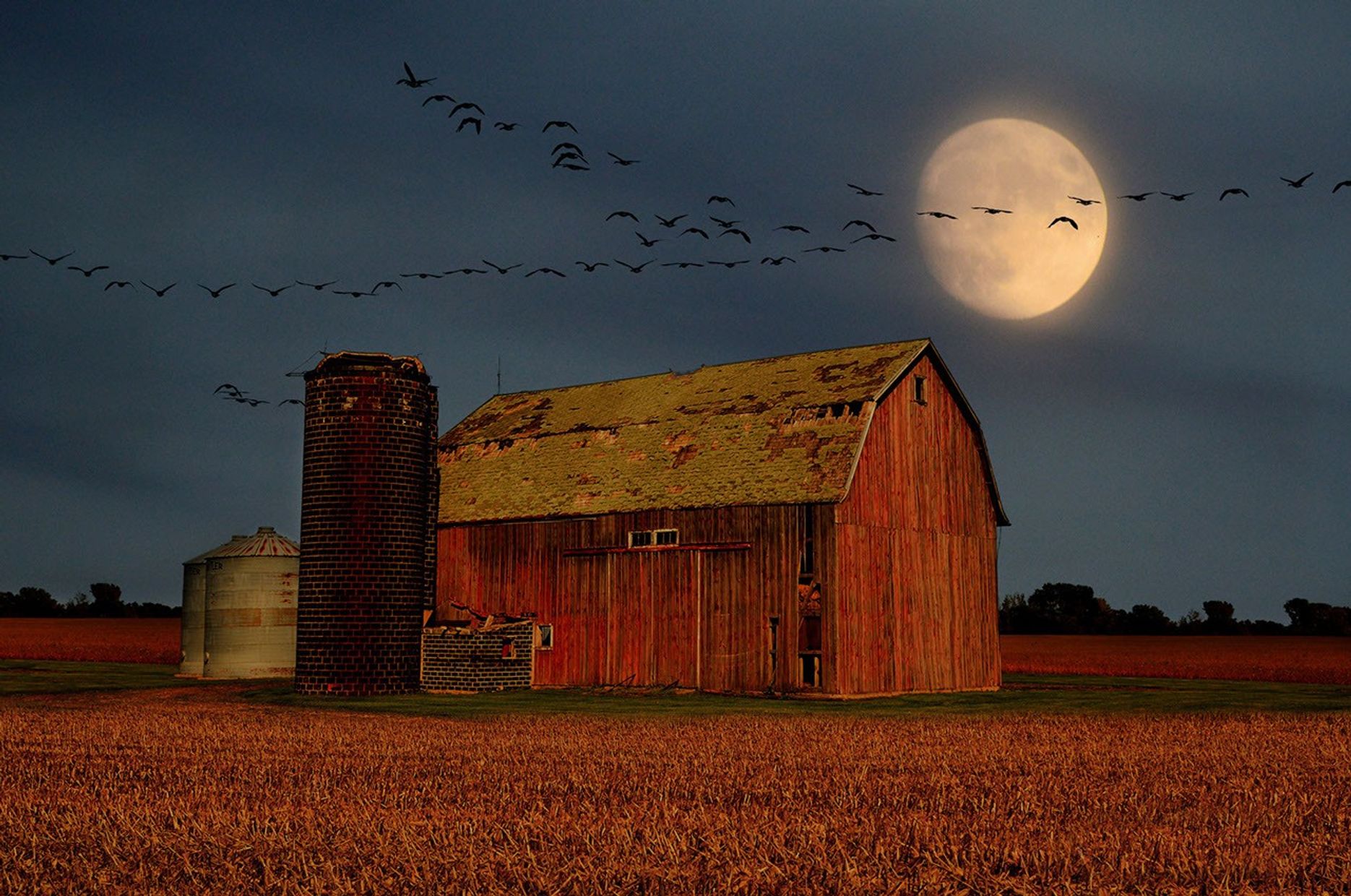
- Sept. 26: Harvest Moon rises near Saturn and Neptune
Transcript
The Moon joins a tea party… Venus cranks up the brightness… the seasons officially change… and the Harvest Moon meets up with some planetary neighbors.
That’s What’s Up for September.
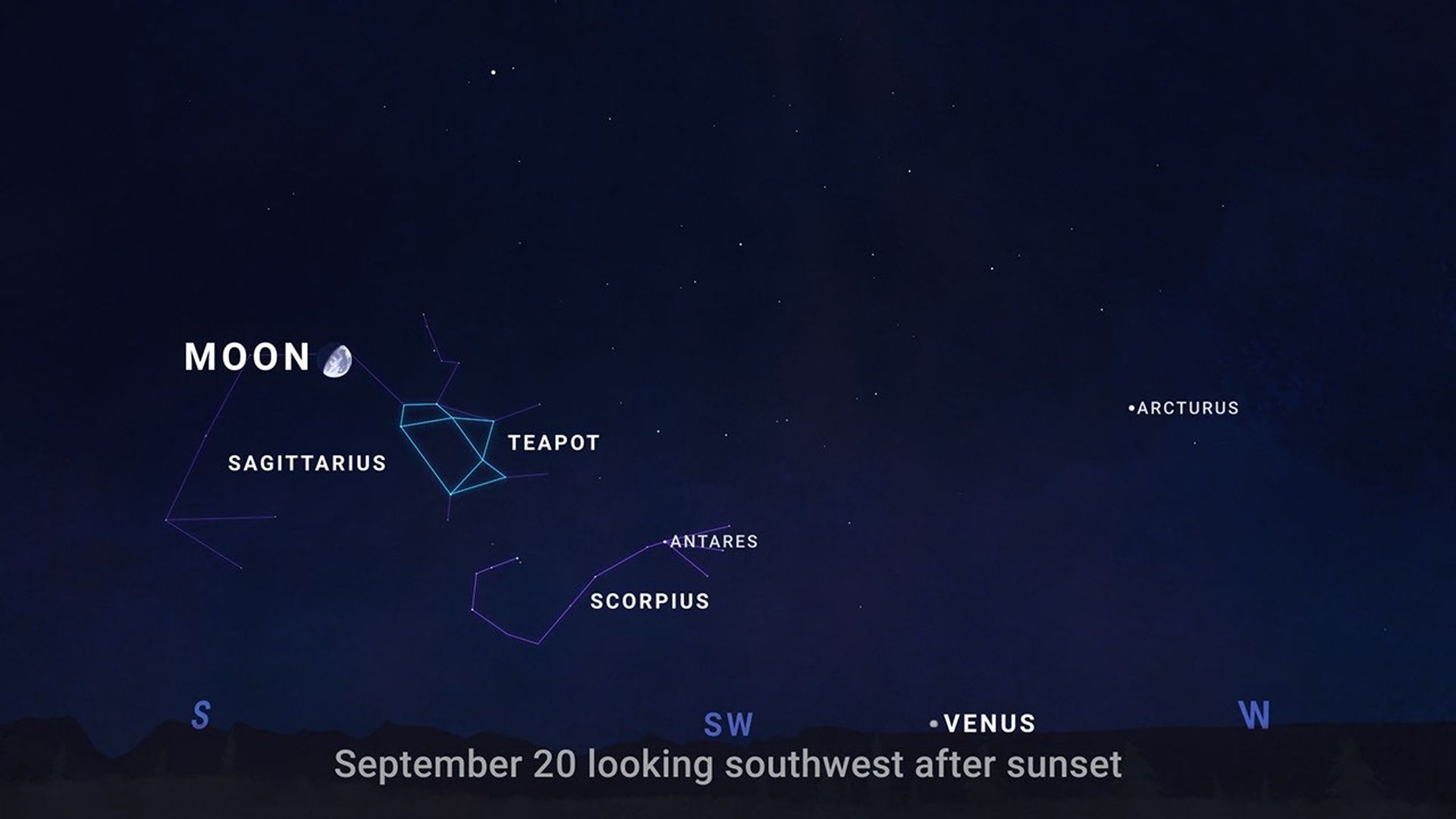
From September 14 through 20, let the Moon guide you to a few celestial landmarks. About an hour after sunset, look south to find the Moon in the evening sky.
Night by night, the Moon shifts position against the background stars, passing near Antares.
This bright, reddish star marks the heart of the constellation Scorpius.
Next you’ll see the Teapot, a group of stars in neighboring Sagittarius that really does resemble a teapot, complete with a handle, lid, and spout.
If you are under an especially dark sky… you may see hazy steam rising from the Teapot’s spout.
Follow that steam to its thickest part, and you’ll be looking toward the center of our Milky Way galaxy.
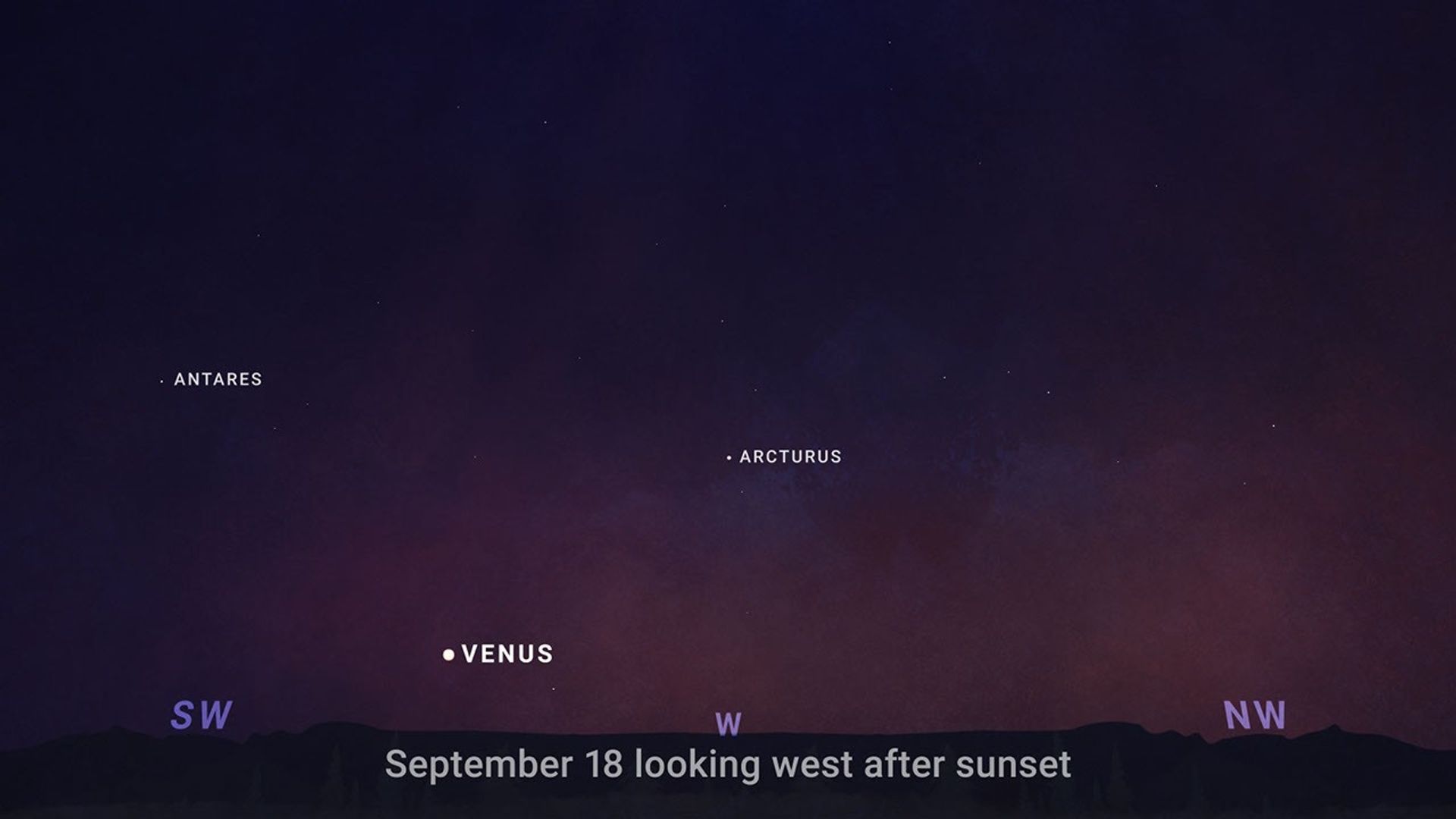
Look west on September 18 as Venus hits peak brilliance, shining at its brightest of this evening appearance..
You won’t have to search hard to find it. Shortly after sunset, Venus will stand out as a brilliant point of light low above the western horizon, outshining every star around it. A clear view of the horizon will give you the best chance to catch it before it sets.
On September 19, celebrate International Observe the Moon Night!
People around the world are invited to look up and connect with our nearest celestial neighbor while learning more about lunar science, exploration, and the many ways the Moon has shaped cultures around the world. Find an event near you — or learn how to participate from wherever you are — at go.nasa.gov/ObserveTheMoon.
Then on September 22, it’s officially fall in the Northern Hemisphere …while spring begins in the Southern Hemisphere.
That’s the September equinox, when the Sun is directly above Earth’s equator and day and night are close to equal in length around the world.
From there, daylight keeps getting shorter in the Northern Hemisphere and longer in the Southern Hemisphere.
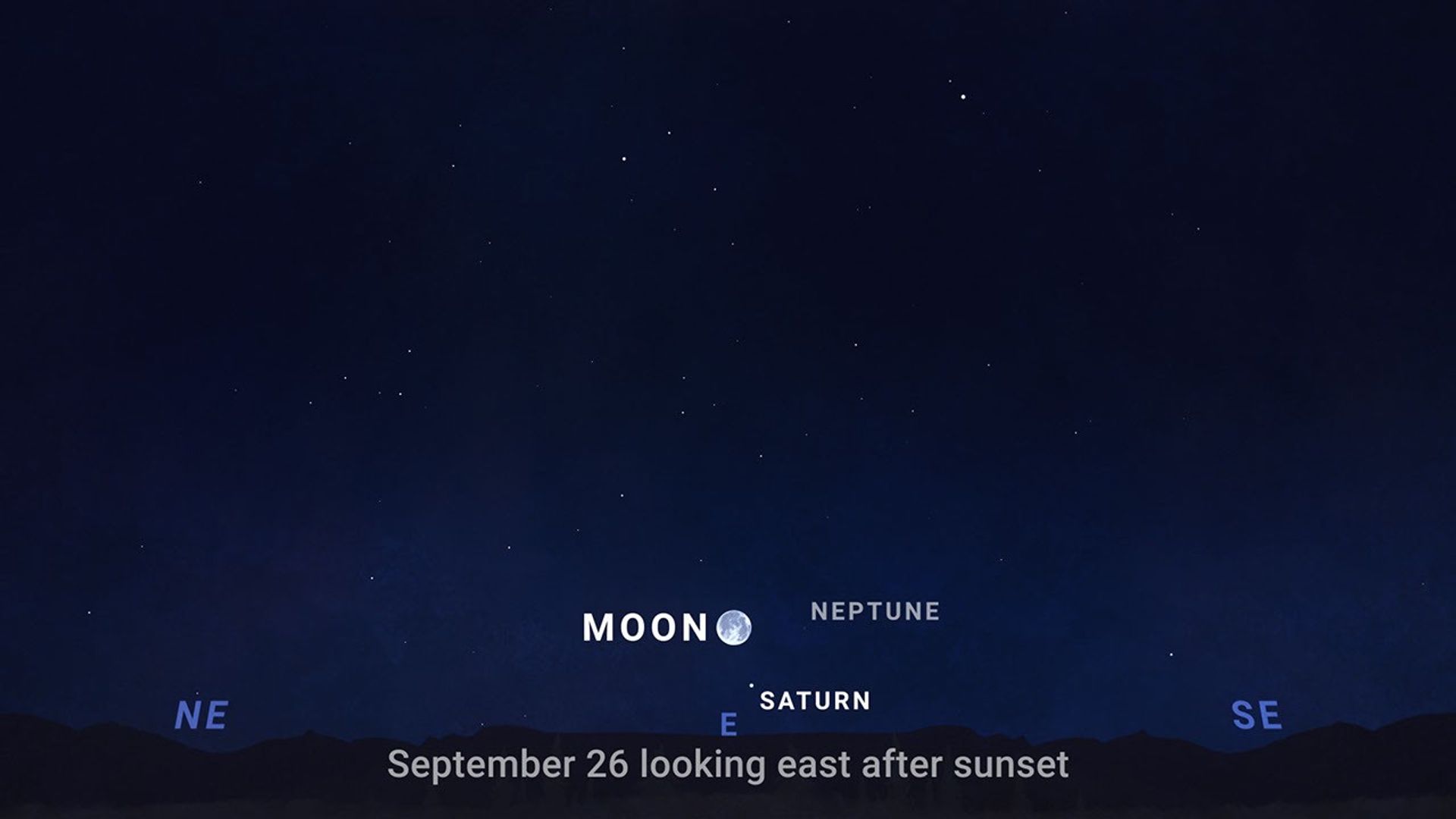
And on September 26, the Harvest Moon takes center stage, rising in the east shortly after sunset.
It won’t be alone. Saturn appears nearby, with faint Neptune completing a wide triangle in the sky.
Saturn is the easy one-you can see it with just your eyes. Neptune is a bit more challenging. At around magnitude 8, it’s too faint to see with the unaided eye …so you’ll need binoculars or a telescope to spot it. Darker skies and good observing conditions can help bring it into view.
Here are the phases of the Moon for September.
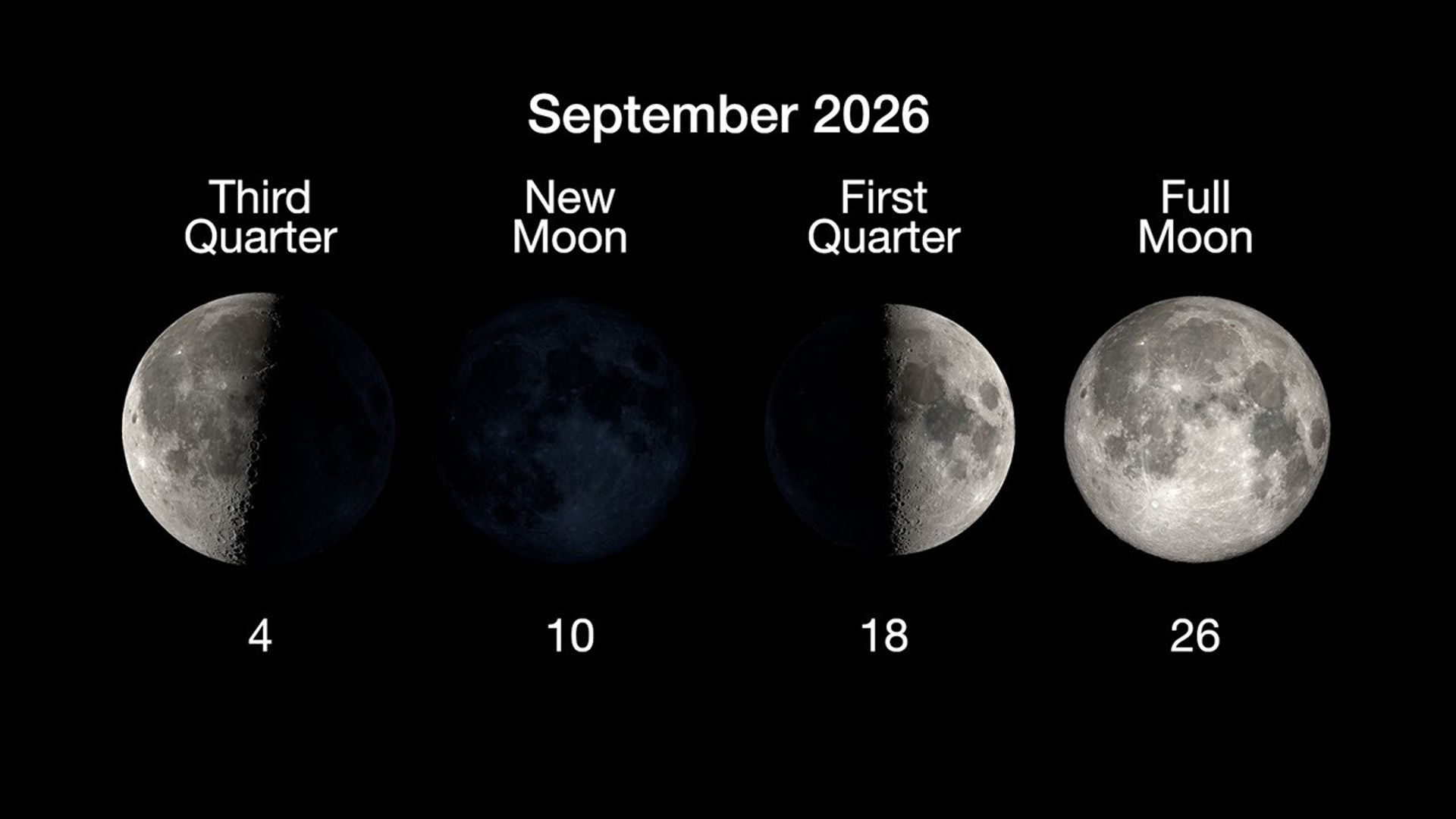
You can stay up to date on all of NASA’s missions exploring the solar system and beyond at NASA Science. I’m Raquel Villanueva from NASA’s Jet Propulsion Laboratory, and that’s What’s Up this month.

Share
Details
Related Terms
Source: science.nasa.gov
